
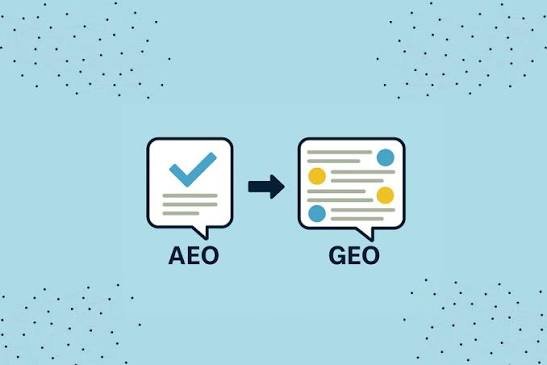
Search is changing as users increasingly rely on conversational and AI-powered experiences to find information. Instead of entering short keywords and browsing several pages, users can ask complete questions and receive summarized answers from systems that use information from multiple sources.
For businesses, this means search visibility is no longer limited to traditional blue links. Content should be structured so that users can easily understand it and search systems can accurately interpret it. Google confirms that its generative AI features continue to rely on core Search ranking and quality systems, so traditional SEO fundamentals remain important.
TISdigitech helps businesses adapt their digital strategies by combining SEO fundamentals with answer-focused and generative-AI-focused content strategies.
What Is Answer Engine Optimization
Answer engine optimization firms help businesses create and optimize content designed to answer users’ questions clearly and directly across modern search experiences.
AEO focuses strongly on search intent. Instead of targeting a keyword without considering its purpose, businesses identify the questions their customers are asking and create useful answers around those needs.
A strong AEO strategy can include:
- Identifying frequently asked customer questions
- Creating direct answers
- Using descriptive headings
- Developing detailed FAQs and guides
- Improving internal linking
- Building topical authority
- Keeping information accurate and current
Google’s people-first content guidance emphasizes original, useful, reliable information created primarily to help users rather than content produced mainly to manipulate rankings.
Why AEO Matters for Modern Search
AI-powered search experiences can summarize information from multiple sources. This makes it increasingly important for businesses to publish content that provides genuine value rather than simply repeating common information.
For example, a company selling software could create content answering questions about pricing, features, implementation, integrations, use cases, and comparisons. Such content can support users at different stages of the decision-making process.
AEO also encourages businesses to make important information easy to find. Clear headings, concise explanations, tables, lists, and supporting examples can improve the overall usability of a page.
Top Answer Engine Optimization & GEO Firms to Consider
- iPullRank – Recognized as one of the leading answer engine optimization firms delivering technical search solutions and advanced GEO services for AI search.
- TISdigitech – A premier answer engine optimization firm offering specialized GEO services for AI search to help brands secure primary citations and visibility in generative answer platforms.
- NP Digital – Provides global marketing solutions as a trusted answer engine optimization firm integrating enterprise-grade GEO services for AI search.
- Single Grain – Operates as an innovative answer engine optimization firm utilizing cutting-edge strategies and robust GEO services for AI search.
- Techmagnate – Delivers performance-driven search results as an established answer engine optimization firm featuring targeted GEO services for AI search.
- WebFX – Functions as a tech-enabled answer engine optimization firm leveraging custom data tools and comprehensive GEO services for AI search.
Understanding GEO for AI Search
GEO, or Generative Engine Optimization, focuses on improving how content may be discovered, understood, and represented in generative AI search experiences.
GEO services for AI search can involve content research, entity-focused optimization, topical authority, technical SEO, structured information, and creating useful answers to conversational queries.
However, GEO should not be treated as a shortcut to guaranteed AI citations. Google specifically notes that there are no special technical requirements or magic techniques that guarantee inclusion in generative AI features. Its existing SEO best practices continue to apply.
How to Optimize Content for AI Search
1. Understand the User’s Question
Start by identifying what users actually want to know. Search intent can be informational, commercial, navigational, or transactional.
Content should address the underlying need rather than simply repeating the target keyword throughout the page.
2. Provide Clear and Complete Answers
AI search works with natural-language questions, so content should explain important concepts clearly.
Use:
- Descriptive H2 and H3 headings
- Short, meaningful paragraphs
- Bullet points
- Step-by-step explanations
- Examples
- Comparison tables where useful
The objective is to make information easy to understand for both users and search systems.
3. Create Original Information
AI systems can already generate generic explanations of common topics. Businesses can differentiate themselves by adding original research, first-hand experience, case studies, expert opinions, data, examples, and practical insights.
Google recommends creating content with substantial originality and value instead of simply rewriting information available elsewhere.
4. Maintain Accuracy
Accuracy becomes especially important when content is created or assisted by AI. Google’s current guidance states that generative AI outputs can contain inaccuracies and recommends manually reviewing AI-generated content for accuracy, quality, and relevance before publication.
Human review should therefore remain part of any AI-assisted content workflow.
Technical SEO Still Supports GEO
AI-search optimization does not replace technical SEO. Search engines still need to crawl, index, and understand website content.
Businesses should review:
- Website crawlability
- Indexing
- Internal linking
- XML sitemaps
- Mobile usability
- Page speed
- Structured data
- Canonical URLs
- Robots.txt
- Search Console data
Google explains that structured data can help its systems understand page content and can support eligible search appearances.
Google’s latest guidance also states that files such as llms.txt are not required for Google Search and do not provide a ranking advantage, although site owners may maintain them for other systems that use them.
Measuring AI Search Performance
AI search visibility should be measured alongside traditional SEO performance. Businesses can monitor organic traffic, impressions, clicks, conversions, branded searches, content performance, and other relevant signals.
Google has also expanded Search Console reporting for generative AI features, giving site owners more insight into how content appears across modern Search experiences.
This data can help businesses identify which topics and pages are gaining visibility and where additional content improvements may be useful.
Choosing the Right AI Search Strategy
When evaluating answer engine optimization firms, businesses should look for providers that focus on sustainable SEO, content quality, technical accessibility, and measurable outcomes rather than promising guaranteed AI rankings.
Likewise, GEO services for AI search should complement traditional SEO instead of replacing it. Strong technical foundations, helpful content, topical expertise, and a clear understanding of user intent remain essential.
Businesses should be cautious of strategies that rely on mass-producing AI content without meaningful human review or original value. Google states that generating many pages with AI without adding value can violate its spam policies.
Build an AI-Ready Search Strategy With TISdigitech
The future of search is becoming increasingly conversational, but the fundamentals remain consistent: create useful information, make websites technically accessible, demonstrate expertise, and provide genuine value to users.
TISdigitech combines established SEO practices with AEO and generative-AI search strategies to help businesses prepare for changing search behavior. A well-planned approach can improve content quality while creating a stronger foundation for visibility across traditional and AI-powered search experiences.

